My son has always been fascinated by light. He would blow raspberries into golden rays of sunshine just to watch his spit glint in the light as it floated away from him. He would lie under the Christmas tree and look up into its lit branches from underneath. I would occasionally stick my head under it and lie next to him. He would giggle and wiggle his feet back and forth excitedly, without ever removing his gaze from the kaleidoscopic view the perspective afforded him. I would stay there with him for as long as I could.
In this dream-giving place we live, we imagine exploring the land to observe what might glint in the sunlight. We dream of getting to watch bees go about their busy, complicated lives and harvest the precious bronzed gold they make. We want to provide a sanctuary for all the wild things. No matter how great or small. We wish we could breathe life back into some land somewhere, because life is precious.
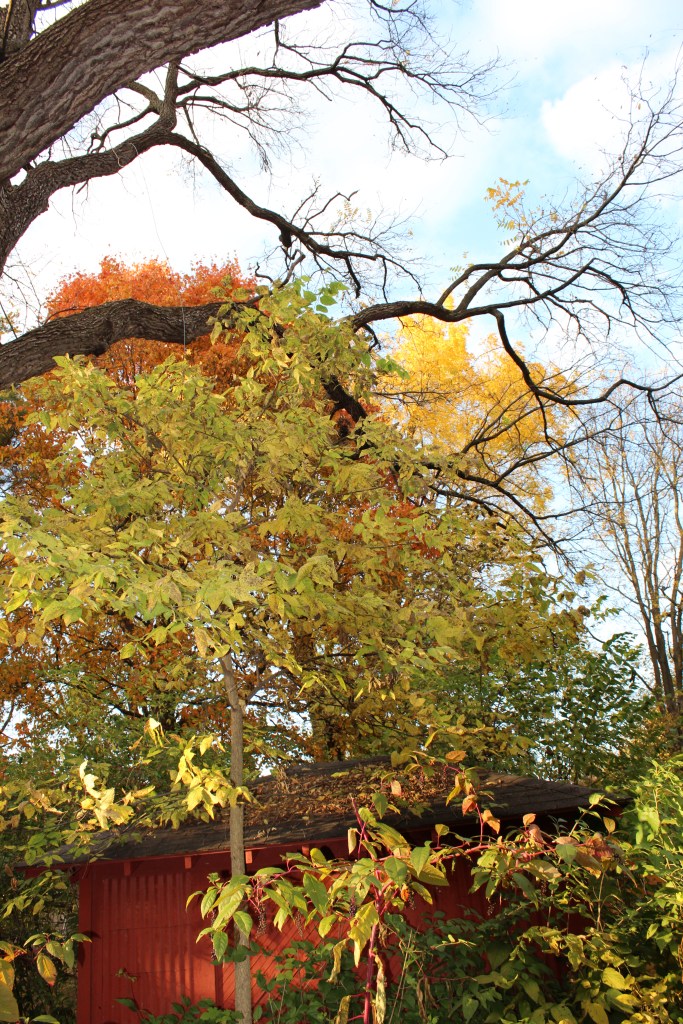
Convincing myself I could do it, I decided I could create a micro-diverse organic garden. Since people can have chickens these days, I could use them for pest control with whatever I wanted to grow. Turns out, the little area I bought has an ordinance that says I can’t have chickens. I never know when I am taking something for granted until it isn’t there. So, plan B. Rewilding.
Early morning coffee in hand, I watched squirrels boil out of the massive maple tree in the backyard just as the sun would come up. Somehow, they all came out within seconds of each other. I watched them gather leaves in their mouths and stuff them into those same holes after the first frost hit. Sometimes they pluck them right off the tree.
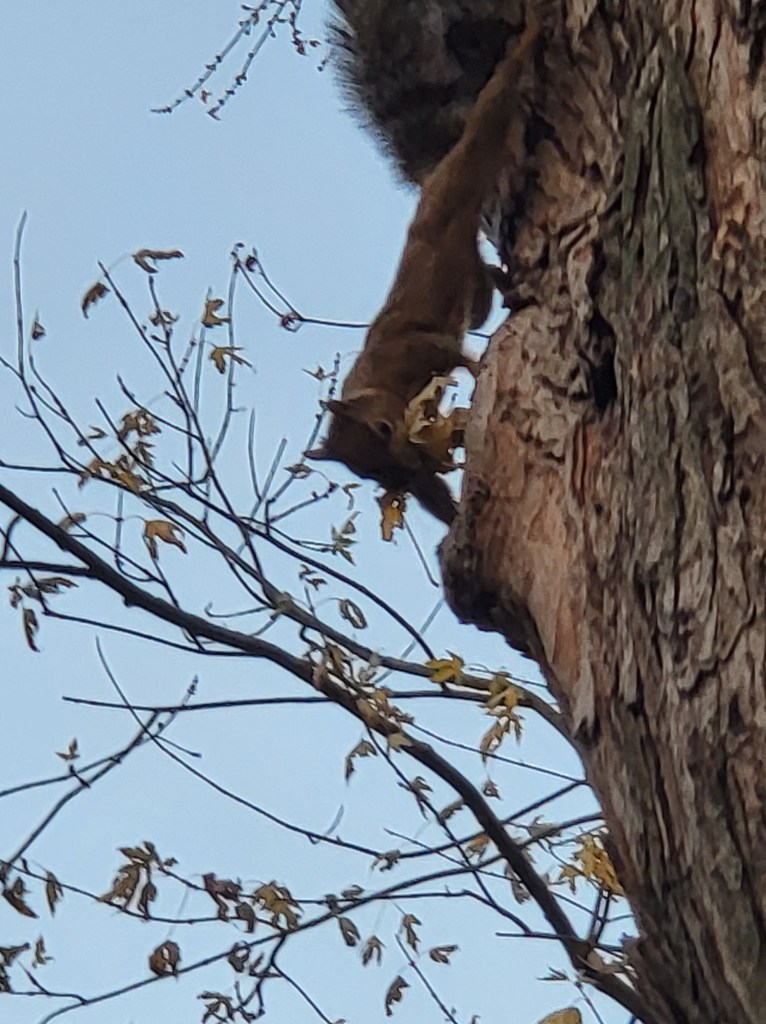
I learned that I could certify my land as a national wildlife refuge, and as a certified pollinator yard, which would protect me from city citations for not having a neatly primmed property. This allows us to support insect life by letting it grow, and to leave the leaves for the animals to use, as nature intended. I still haven’t certified it because there are other priorities at the moment. However, there will be a sign displayed eventually so people know it’s on purpose, and a work in progress to find balance, so if you see it someday, we thank you for kindness and understanding.
We watched Kiss the Ground this past spring and learned how living plants pull bad carbon from the air, which feeds bacteria through the roots, which then emit good carbon into the soil. Suddenly, my son gets very protective of the thistle that had been growing all over the property. It is healing the environment, he says. We look up what pollinators are supported by thistle. There are over 200 species of insects alone, because bees aren’t the only things that pollinate. As well as various bird species. I had to admit I’d observed a hummingbird visit them as well. Left without much to mount an argument after that, I agree that we could let it grow until we had other native things to offer our pollinators.
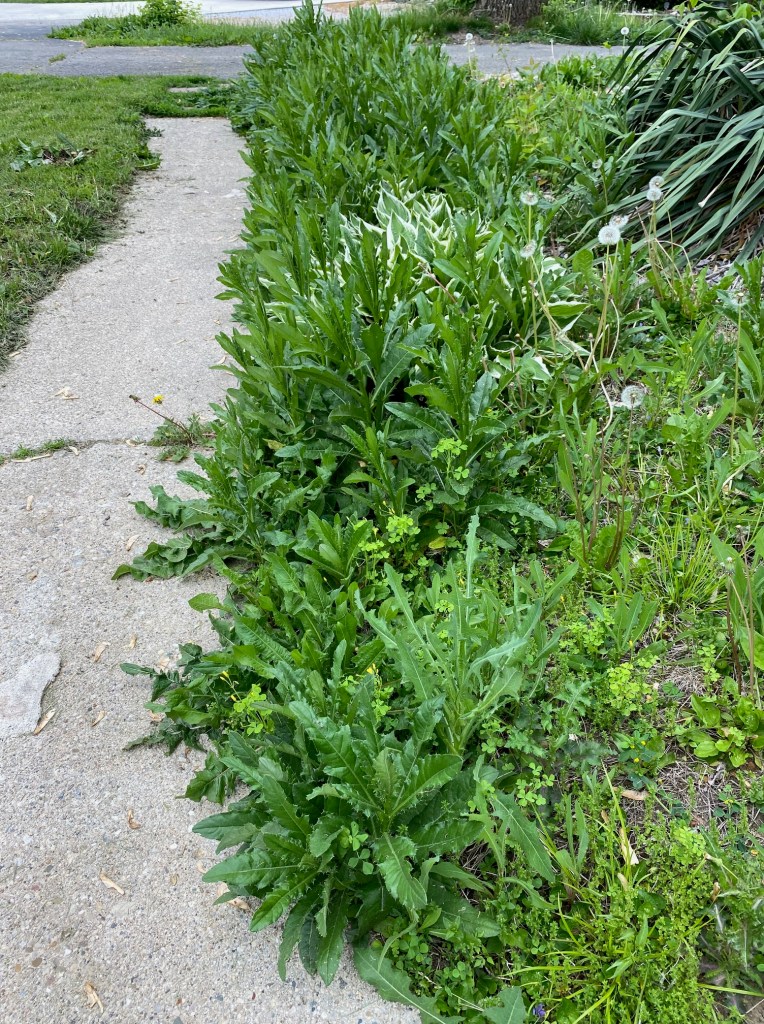
The aphids began to flock to the buds as they grew and led to our research and discovery. As it turns out, thistle is one of 100 different myrmecophytes, which are plants having mutually beneficial relationships with ants. We were both fascinated by the ants running up and down the stems, busy collecting the sugary syrup, called honeydew, the aphids produce without harming the plant. I marveled at how the ants were leaving the house alone. Literally managed by them like humans and cattle, the aphids weren’t eating the other plants either.
Yellow jackets and wasps were everywhere, busy hunting aphids, and ants sprayed microscopic acid to defend against them. Thus completing another mutually beneficial relationship. Honeybees flew everywhere, collecting pollen, along with a cloud of other various insects. I watch the chipmunks dash through the bottom stalks of the mature plants and notice the lack of thorns down there. I wonder if nature intended to provide protection for the adorable little critters. It was a magical place.
At least it was until the wildflowers began to reach their full height and towered above us before finally toppling over and hanging in the middle of the walkway. Delivery personnel began to avoid my walkway, preferring the overgrown yard as a path. Finally, a honeybee got caught in my hair on the same day a family member woke me up from the dream, and I had to admit my mistake before somebody got hurt.
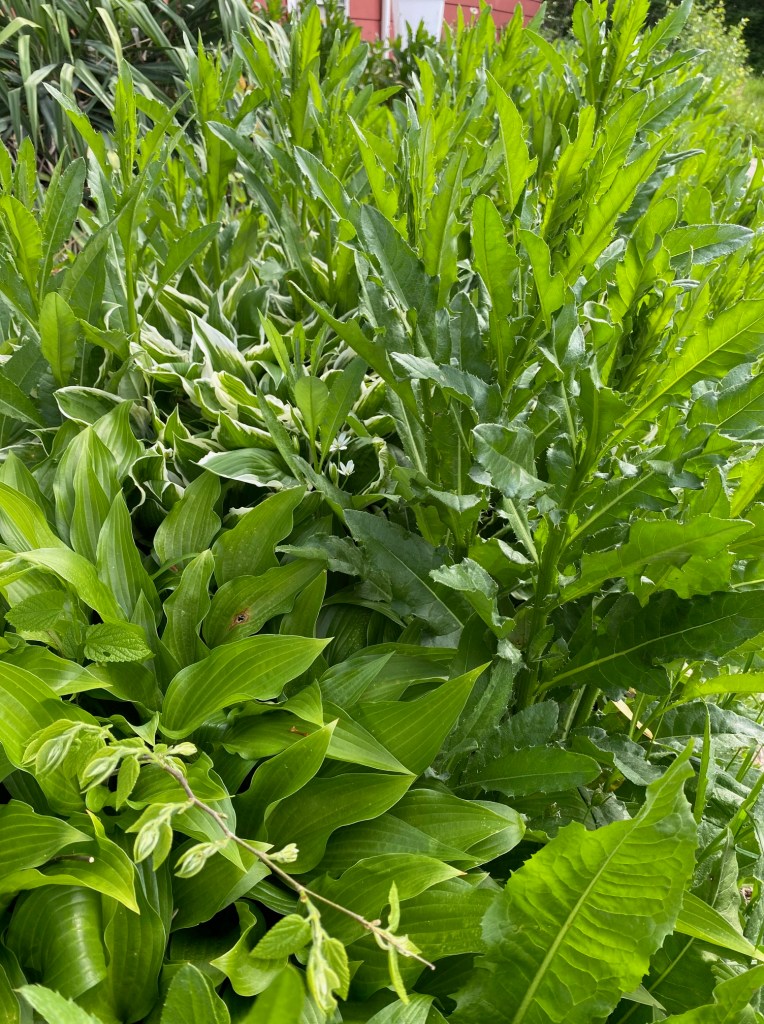
That was how I found myself outside, ripping out the precious, life-supporting wildflowers while the smoke from Canada’s wildfires blanketed Indiana. The mature ones come out easily, but the sprouts are very stubborn. I reminded myself of two things over and over as I pulled. Research any plant I don’t know before I let it grow, and 2 species of butterflies lay their eggs on this thistle, which makes me the butterfly murderer.
 Re-wild Life Blog
Leave a comment